We really need to stop treating "cozy" as another word for "sweet." When the seasons change, I don't always want my apartment to smell like vanilla frosting or freshly baked cookies. Sometimes, it's the clean softness of musk, the golden, resinous warmth of amber, or the earthy depth of patchouli that makes a space feel inviting.
Vanilla has its place, of course, but it's only one kind of warmth. Understanding how these four fragrance notes differ is the key to finding a home scent that feels cozy without necessarily smelling like dessert.
Here's the simplest way to think about them:
| Fragrance Note | What It Smells Like | The Kind of Warmth It Creates |
| Vanilla | Creamy, softly sweet, smooth | The comfort of a soft blanket and something freshly baked |
| Musk | Clean, powdery-soft, skin-like | Sun-warmed cotton and quiet, lived-in comfort |
| Amber | Rich, resinous, balsamic | Warm lighting, polished wood, and an intimate evening atmosphere |
| Patchouli | Earthy, woody, herbal | Deep woods, textured interiors, and a darker, grounded warmth |
The interesting part isn't simply recognizing each note. It's noticing what happens when those notes become part of a complete home fragrance.
The Sweet Side: What Does Vanilla Smell Like?
Vanilla smells creamy, gently sweet, and softly warm, with a smooth, almost balsamic richness beneath its familiar sweetness.
But here's something worth remembering: vanilla doesn't automatically make a fragrance smell like cake.
Its personality changes depending on what surrounds it.
Pair vanilla with caramel and cream, and the result feels indulgent, buttery, and unmistakably dessert-inspired. Place it beside sandalwood, musk, or deeper resins, and the same vanilla note becomes quieter—a soft warmth that rounds out the fragrance rather than taking center stage.
Think of the difference between vanilla custard and a beautifully furnished room with a faint trace of vanilla in the background. Both share that recognizable warmth, but they're entirely different scent experiences.

Aromadd's Vanilla Cream is an example of vanilla taking the sweeter route.
Its fragrance notes are:
-
Top: Cream, Caramel
-
Middle: Vanilla, Caramel
-
Base: Vanilla

With cream and caramel supporting vanilla throughout the composition, the result is a rich, buttery-smooth vanilla cream scent. It's the kind of fragrance I'd point to when someone says they actually want their home to smell like a dessert.
But when I'm looking for warmth without that dessert feeling, I start paying attention to the notes that surround—or replace—vanilla.
That's where musk, amber, and patchouli become much more interesting.
Three Other Ways a Fragrance Can Feel Warm
Not every inviting room needs a sweet note at its center.
Some fragrances feel cozy because they're soft and familiar. Others bring the warmth of resin, polished wood, or earthy greenery. Musk, amber, and patchouli offer three distinct ways to create those impressions.
What Does Musk Smell Like? Clean, Soft, and Skin-Like
Musk is the note I associate with warmth that doesn't announce itself.
Instead of smelling sweet or heavily spiced, modern musk often brings to mind clean skin, soft fabric, and cotton warmed by the afternoon sun. White musk, in particular, has an airy, lightly powdery quality that makes a fragrance feel gentle and close.

It's the difference between a room that smells freshly decorated for the holidays and one that simply feels comfortable to spend time in.
What makes musk especially interesting is that it rarely tells the whole story by itself. It changes character with the notes around it.
Consider two Aromadd fragrances.
In White Tea, a white musk base sits beneath citrus, white tea, rose, and tea leaves. It supports the fragrance's clean, delicate character without making it heavy. The overall impression is light, polished, and quietly fresh. Our White Tea fragrance guide explores that profile in more detail.

Now compare that with Apple Cinnamon. Apple, coconut, and caramel meet cinnamon, vanilla, and peach over a base of musk and tonka bean.
Here, musk is no longer part of an airy tea fragrance. It helps bring softness to a warmer, sweeter fruit-and-spice composition.
Same musk direction, two completely different moods: White Tea feels clean and understated; Apple Cinnamon feels rounded, familiar, and warmly spiced.
Choose musk-led fragrances when you want softness to be part of the atmosphere, without making sweetness the main event.
What Does Amber Smell Like? Rich, Resinous Warmth
If musk feels like a soft fabric, amber feels like the warmth of the room around it.
Amber has a golden, balsamic character: rich, rounded, and softly resinous. In perfumery, it's usually a constructed fragrance accord, traditionally associated with warm resins such as labdanum and benzoin, often blended with vanilla.
Where vanilla gives you creamy sweetness, amber adds depth.
I think of it as the difference between adding a sweet scent to my apartment and choosing one that complements the warmth of wood furniture, textured fabrics, and evening light.

Aromadd's Santal shows how beautifully amber works with woods. Its profile combines milk, dried fruits, and olibanum with sandalwood, papyrus, and cedarwood, resting on musk, vanilla, and amber.
The result is a creamy, textured woody direction. Amber gives the composition a richer foundation without turning it into a sugary vanilla fragrance.

But amber can play a much quieter role, too.
In Christmas Cranberry, it sits beneath pine needles, ivy, juniper, cypress, cranberry, and cedar. Instead of defining the whole fragrance, it adds a little warmth underneath the bright evergreen and tart-fruit character.
That's the beauty of amber. It can make a woody fragrance feel fuller or lend a subtle golden warmth to something fresh and green.
Choose amber when you want warmth with depth and texture, rather than obvious dessert sweetness.
What Does Patchouli Smell Like? Earthy, Woody Depth
Patchouli is where warmth gets a little darker.
Its scent is earthy, woody, and slightly herbal, with a deep, textured character that feels different from both creamy vanilla and rounded amber. It comes from the leaves of a tropical aromatic plant, giving it a distinctive botanical identity.

If vanilla reminds me of a soft blanket, patchouli brings to mind the darker wooden furniture and earthy materials that make a room feel settled as the weather turns colder.
This is also why patchouli works so well in deeper autumn and winter fragrances. It gives sweeter or resinous notes something grounded to rest against.
Aromadd's Fireside Ember brings that contrast to life.
Its fragrance notes include:
-
Top: Smoked Spice
-
Middle: Roasted Hazelnut, Peru Balsam, Cashmeran
-
Base: Vanilla, Patchouli, Guaiac Wood

The smoked spice and guaiac wood give Fireside Ember its recognizable fireside character. Roasted hazelnut and Peru balsam add a toasted, resinous richness, while patchouli brings earthy depth beneath the vanilla.
The result isn't a straightforward sweet vanilla fragrance. It evokes dark wood, gentle smoke, and the lingering warmth of a fireplace after the flames have settled.
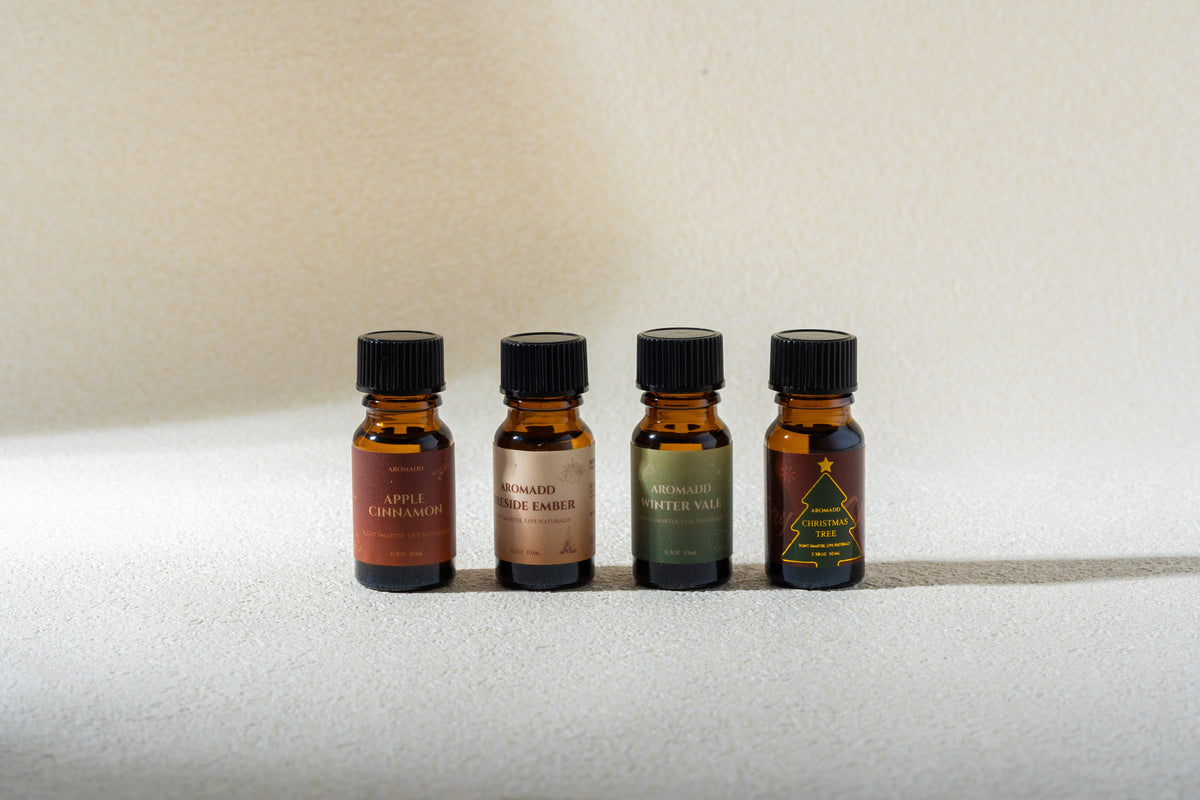
Fireside Ember has its own Aromadd product page and is also included in the seasonal 4×10ml fragrance set.
Choose patchouli-rich fragrances when you want warmth that feels earthy, textured, and a little more atmospheric than sweet.
Why the Same Notes Smell Different in Finished Fragrances
This is where reading fragrance notes becomes genuinely useful.
A single note doesn't tell you how an entire bottle will smell. Vanilla can be creamy or smoky. Musk can support clean tea or warm cinnamon. Amber can make wood feel richer or give fresh greenery a softer finish.
In other words, a fragrance note has a role, not a fixed personality.
Look at three pairs from Aromadd's collection:
White Tea vs. Apple Cinnamon — Musk
In White Tea, musk acts like a soft finishing layer beneath tea and florals. In Apple Cinnamon, it sits with tonka bean beneath fruit, caramel, and spice. One feels airy and clean; the other is warm and rounded.
Santal vs. Christmas Cranberry — Amber
Santal uses amber alongside musk, vanilla, and creamy sandalwood to create rich woody depth. Christmas Cranberry uses it more subtly beneath tart fruit and fresh evergreen notes. Amber adds warmth to both, without making them smell alike.
Vanilla Cream vs. Fireside Ember — Vanilla
Vanilla Cream pairs vanilla with caramel and cream, giving you an unmistakable dessert character. Fireside Ember surrounds vanilla with patchouli, smoked spice, and guaiac wood. The sweetness moves into the background while woods and smoke take the lead.
These comparisons reveal something useful about what scent goes well with vanilla: it depends on which part of vanilla you want to emphasize.
Caramel makes it sweeter. Musk can soften it. Amber adds resinous richness. Patchouli and dark woods create a deeper contrast.
You don't need to mix diffuser oils yourself to explore these combinations. Look for finished fragrances that already bring those notes together.
When browsing a fragrance description, I find three questions more useful than memorizing the entire note pyramid:
-
What's the main impression? Creamy dessert, clean fabric, warm woods, or smoky earth?
-
What kind of warmth supports it? Vanilla sweetness, musk softness, amber richness, or patchouli depth?
-
Which notes change the direction? Caramel makes vanilla more indulgent; citrus brightens musk; woods deepen amber; smoke adds contrast to patchouli.
Our guide to top, middle, and base notes explains how to read those descriptions without treating them as a rigid timeline for continuous diffusion.
Which Kind of Warm Home Fragrance Suits You?
When the seasons change, I don't think the goal should be finding the richest or sweetest fragrance possible. It's finding a scent that suits the way you want to feel in your space.
Some days, that means the familiar comfort of vanilla. Other times, it's soft musk in the background or the deeper presence of amber and woods.
Here's how I'd narrow the choices down.
-
For creamy, unmistakable sweetness — choose Vanilla. If you love the idea of a softly lit living room that smells like vanilla custard or caramel, Vanilla Cream is the clearest direction. It's sweet by design, and that's the appeal.
-
For a quiet, clean kind of warmth — choose Musk. If you prefer an airy fragrance that sits comfortably in the background, look toward White Tea. If you want that same softness beneath a more familiar fruit-and-spice scent, Apple Cinnamon takes musk in a warmer direction.
-
For rich, polished woods — choose Amber. If your idea of cozy involves wood furniture, soft lighting, and a more refined atmosphere, explore Santal. For something brighter, Christmas Cranberry shows how amber can warm a crisp evergreen fragrance without overwhelming it.
-
For deep, earthy evening warmth — choose Patchouli. If you prefer smoky woods and toasted richness over bakery sweetness, Fireside Ember brings patchouli together with vanilla, smoked spice, and guaiac wood for a darker winter fragrance.
For me, the most useful thing about these four notes is that they make "cozy" feel less like a single scent and more like a personal preference.
Vanilla is creamy. Musk is soft. Amber is rich. Patchouli is earthy.
You can love one, enjoy several together, or move between them as the seasons change.
A cozy home doesn't have to smell like dessert. It just has to smell like somewhere you want to be.


Leave a comment
This site is protected by hCaptcha and the hCaptcha Privacy Policy and Terms of Service apply.