What do Christmas scents actually smell like? Across most American homes, the classic scents of Christmas fall into four distinct fragrance directions: crisp evergreen needles like pine and fir, bright citrus peel paired with warm cinnamon and clove, winter fruits like apple and cranberry alongside vanilla comfort, and quiet winter woods built from cedar, resins, and gentle smoke. Holiday home fragrance does not have to mean heavy, sugary bakery candles. By learning to separate these four scent families first—and then weighing how much freshness, sweetness, or woody depth you prefer—you can choose a seasonal aroma that feels balanced, natural, and genuinely inviting in your living space.
Four Christmas Scent Directions and How They Smell
The easiest way to compare Christmas fragrances is to group familiar notes into four practical sensory directions based on how they register in a room—from brisk greenery to dry, smoky woods.
Fresh Evergreens: Pine, Fir and Winter Greenery
When people picture traditional Christmas scents, they usually think of freshly cut holiday greenery—yet needle notes and dry wood notes behave very differently. Pine, fir, and spruce create a crisp, green, needle-like, and lightly resinous impression that recalls cold outdoor air and a newly decorated tree, as captured in a classic Christmas Tree fragrance direction. Cedar, by contrast, smells drier and more like cut timber or a cedar chest than green needles. It also helps to separate evergreen foliage from cool peppermint: mint adds an icy, mentholated lift, which is a distinct winter accent rather than a synonym for pine. Choose this direction when you want your home to smell brisk, leafy, and outdoorsy without added sugar.

Citrus and Warm Spice: Orange, Cinnamon and Clove
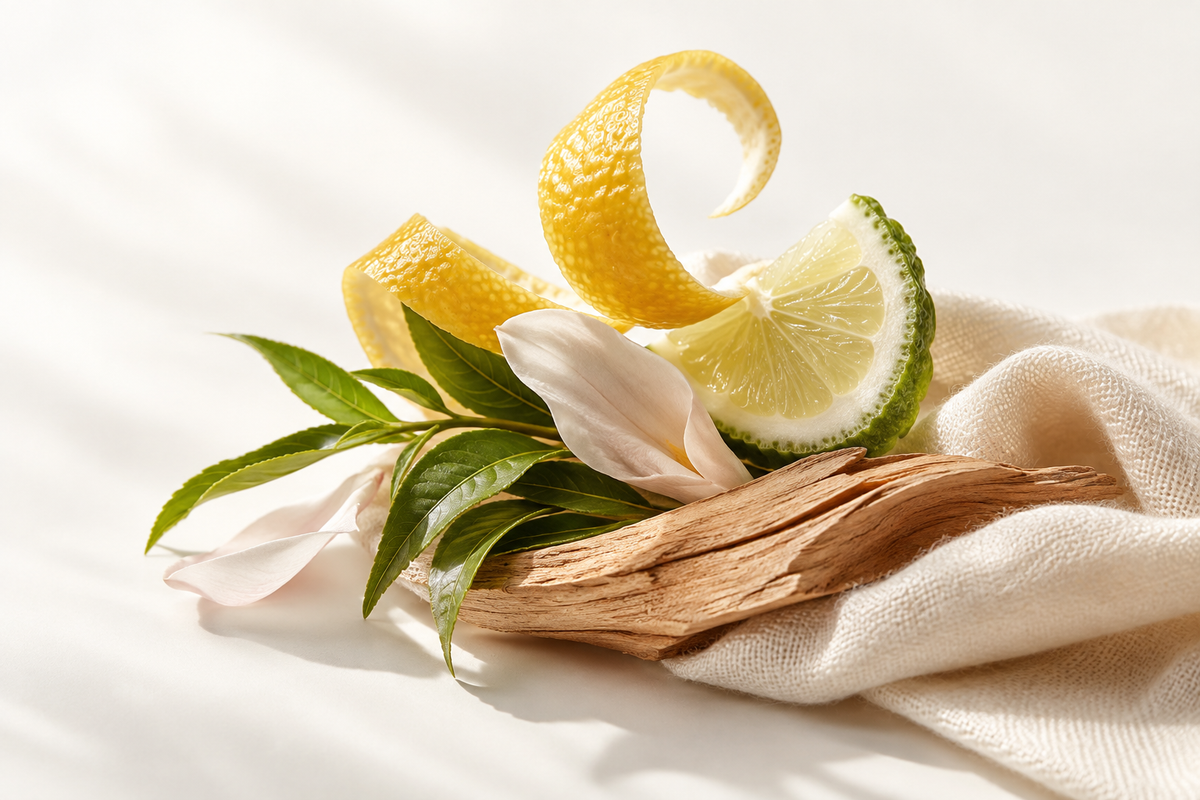
Some of the most familiar Christmas holiday scents pair bright citrus peel with dry warming spices. Sweet orange and clementine contribute a zesty, sunlit top note that keeps the air feeling lively, while cinnamon, clove, and nutmeg provide a warm, dry-spiced depth underneath. Together, citrus brightness prevents the spices from feeling heavy or dusty, while the spice notes ground the citrus so it reads as seasonal rather than summery. Unlike bakery gourmand blends built around frosting or buttercream, a citrus-and-spice direction delivers traditional holiday warmth with far less sugary weight—making it ideal if you enjoy festive spice with a clean, lifted opening.

Winter Fruit and Sweet Comfort: Apple, Cranberry and Vanilla
It also helps to separate fruit character from dessert sweetness, because holiday fruit notes do not automatically smell sugary. In home fragrance, apple offers a crisp, familiar orchard roundness, whereas cranberry brings a tart, bright, and slightly tangy contrast that cuts through winter heaviness. By comparison, vanilla, gingerbread, and caramel belong to the creamy gourmand side of holiday fragrance, wrapping a room in rich, bakery-style softness. Recognizing that fruitiness and sweetness move independently makes it easier to find the right Christmas scent for your taste: you can choose tart cranberry for a vibrant lift, crisp apple for approachable warmth, or vanilla-rich blends when you truly want dessert-like comfort.

Quiet Winter Woods: Cedar, Vetiver, Myrrh and Smoke
For anyone who finds both sweet bakery notes and sharp pine needles overwhelming, quiet winter woods offer a low-sweetness alternative for Christmas home fragrance. Here, the focus shifts to texture and structure: cedar provides a dry, architectural woodiness; vetiver adds an earthy, rooty dryness; myrrh and amber introduce a smooth, resinous warmth; and smoke accords evoke toasted wood and fading hearth embers. Rather than reading as breezy or uniformly crisp, these woodsy scents create a composed, grounded winter atmosphere. They suit households that prefer dry timber, warm resin, or subtle fireside character over traditional fruit and candy cane sweetness.

-
Fresh Evergreens: Brisk, needle-green, and lightly sappy (pine, fir, spruce) rather than icy mint or dry timber.
-
Citrus & Warm Spice: Zesty orange peel balanced by dry, warming cinnamon, clove, and nutmeg.
-
Winter Fruit & Sweet Comfort: Tart cranberry or crisp orchard apple versus creamy vanilla and gingerbread warmth.
-
Quiet Winter Woods: Dry cedar, earthy vetiver, warm myrrh, and toasted smoke with minimal sweetness.
How to Choose the Best Christmas Scent for Your Home
Because personal taste varies so widely, the best Christmas scents are not defined by a universal popularity ranking—they are the ones that match your tolerance for sweetness, brightness, and weight. You can narrow down your options in two quick steps. First, decide whether you want the room to feel fresh and lifted (evergreens, citrus peel, tart berry) or warm and enveloping (spices, vanilla, resins, toasted woods). Second, set your sweetness boundary: choose low-sweetness structure if sugary aromas tire your nose, or lean into gourmand richness if you love cozy bakery notes. From there, fine-tune the finish across different Christmas scent profiles by deciding whether you prefer a green, dry, or gently smoky edge:
| If You Prefer... | Look For These Notes & Directions | Avoid or Compare Carefully |
| Classic Christmas tree freshness | Needle-green pine, fir, or spruce with light resin | Compare against dry cedar (woodier) or peppermint (icy rather than leafy) |
| A non-sweet, understated winter mood | Dry cedar, earthy vetiver, myrrh, or citrus-green blends | Avoid heavy vanilla, caramel, or frosting-style gourmand notes |
| Traditional holiday warmth without dessert sugar | Sweet orange or clementine paired with cinnamon and clove | Compare against buttercream or gingerbread blends that read much sweeter |
| Fruity brightness that stays crisp | Tart cranberry paired with winter greenery or crisp apple | Avoid syrup-heavy berry accords if you dislike candy-like sweetness |
| Deep evening fireside comfort | Amber, myrrh, guaiac wood, or toasted smoke accords | Compare against brisk pine or sharp citrus, which feel more daytime-oriented |
Make Your Christmas Home Fragrance Feel Balanced
Even after you pick the right Christmas scent for your home, how a fragrance feels in practice depends heavily on scent intensity. A scent family and its concentration in the air are two separate variables: warm spice or vanilla-rich blends can feel heavy and dense at high intensity, while crisp pine or citrus-green fragrances can turn sharp if over-applied.
If your diffuser has adjustable output settings, start low and increase gradually as needed. Candles, reed diffusers, and cold-air diffusers release fragrance differently, so follow the instructions for your chosen format. Paying attention to intensity also helps when exploring softer, calming scents for home spaces.

Leave a comment
This site is protected by hCaptcha and the hCaptcha Privacy Policy and Terms of Service apply.