Traditional vs. Waterless Diffusers: 5 Maintenance Differences
Last updated: August 2026
Water-based and waterless diffusers use different delivery methods, so they also have different refilling, cleaning, placement, and maintenance requirements. This waterless diffuser vs water diffuser comparison explains the difference without treating either design as risk-free or as a health intervention.
If you are comparing a water diffuser vs waterless essential oil diffuser, start with the routine you will actually follow. A water diffuser asks you to manage water: filling, emptying, drying, and cleaning the tank. A waterless diffuser removes the water tank from the routine, but it still requires compatible oil, correct placement, and model-specific care.
How Traditional Water-Based Diffusers Work
Traditional water-based diffusers usually rely on ultrasonic atomization or steam diffusion. Both methods use water as part of the scent-delivery process, which is why the tank, mist, moisture, and cleaning routine matter so much.
1. Ultrasonic Atomization Technology
Principle: An ultrasonic diffuser uses high-frequency vibrations to break a mixture of water and essential oil into fine droplets. A small fan then helps move that water-based mist into the room.
What this means in daily use: The water reservoir becomes part of the maintenance routine. After use, the tank should be emptied, dried, and cleaned according to the manufacturer's instructions. If water sits in the tank or mist collects near a wall, curtain, shelf, or window, the issue is no longer just fragrance. It becomes a moisture-management problem.
This is why searches like "do diffusers cause mold," "can diffusers cause mold," and "does diffuser cause mold" usually need a careful answer. A diffuser alone is not the only cause of mold. Mold depends on moisture, ventilation, surface dampness, temperature, and cleaning habits. But a water-based diffuser can add mist to the room, so tank care and placement matter.
The EPA notes that excess moisture can encourage biological growth in the home, and the CDC warns that germs can live in humidifiers and spread through the mist they make. A diffuser is not the same as a humidifier, but the practical lesson is similar for any water-using mist device: do not ignore standing water, damp surfaces, or cleaning.
2. Steam Diffusion Technology
Principle: Steam diffusion uses heat to warm water and fragrance material, then releases scented vapor into the air. This is a different delivery method from ultrasonic misting and from waterless cold-air diffusion.
What this means in daily use: Heated fragrance products should be judged by their temperature, placement, supervision, and label directions. They may fit some routines, but they are not the right reference point for every essential-oil or home-fragrance setup.
For households with children, pets, tight shelves, or shared workspaces, the question is not only "does it smell good?" It is also "where will the device sit, who can reach it, and what maintenance does it require?" Any heated or electrical device should be installed and operated according to its instructions.
Aromadd's Waterless Diffusion Technology: Principles and Core Advantages
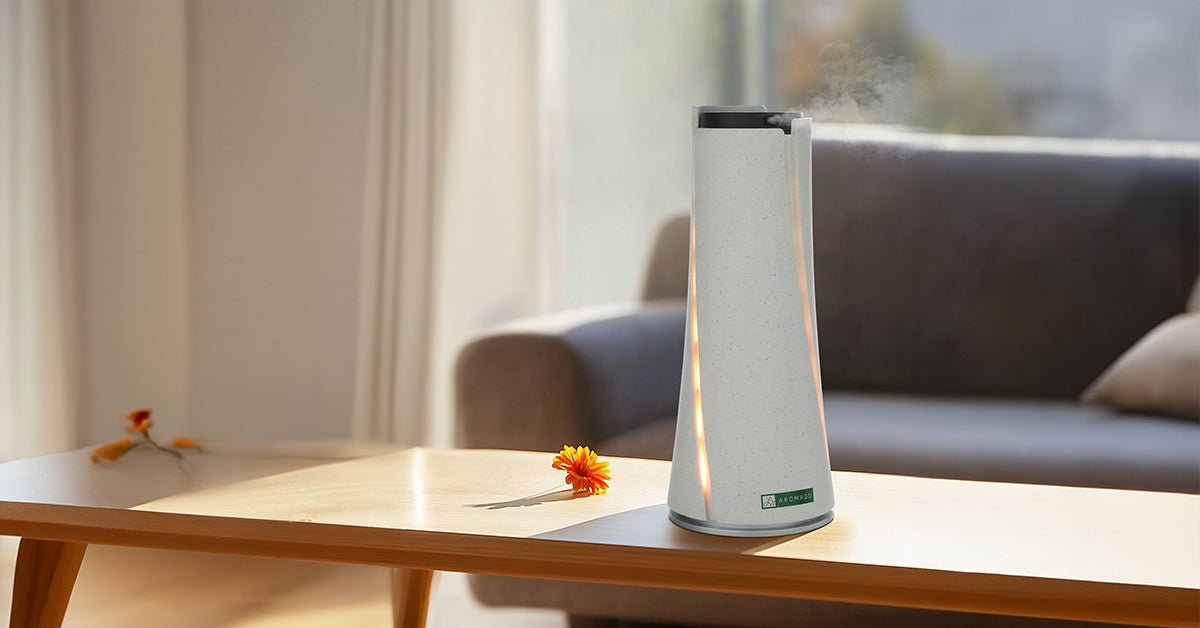
Aromadd's waterless diffusion technology is built around cold-air delivery instead of a water tank or heating plate. It is designed to disperse compatible fragrance oil directly, which changes the maintenance priorities: less water handling, more attention to oil compatibility, nozzle care, placement, and settings.
1. Working Principle of Aromadd's Patent-Pending Waterless Diffusion Technology
How does a waterless diffuser work? In Aromadd's system, high-speed airflow helps atomize compatible fragrance oil into fine particles without adding water. The scent is then carried into the room through air movement rather than a water-based mist.
That is the core difference in a water vs waterless diffuser decision. A water diffuser begins with a tank. A waterless diffuser begins with compatible oil and the diffuser's atomization path. The practical question changes from "Did I clean and dry the water tank?" to "Am I using the right oil, placement, intensity, and schedule for this room?"
For example, a small bedroom may only need a gentle setting for a short period. A living room, office, studio, or lobby may need a more consistent routine because people enter and leave at different times. In that situation, waterless scenting is not only about removing water; it is about making fragrance easier to manage across real room use.
2. Key Features
- Waterless atomization, pure fragrance: Compatible fragrance oil is dispersed without being diluted into a water tank. This supports a cleaner waterless routine, but it also means the oil must match the diffuser's requirements.
- Ultrafine atomization for efficient diffusion: Airflow atomization helps create fine scent particles that can move through the room. In practical terms, you should judge the scent from the normal sitting or walking area, not only beside the machine.
- No heating plate in the delivery method: Aromadd waterless diffusers disperse compatible fragrance oil without adding water or using a heating plate. This describes the delivery method and does not establish a health benefit.
- Oil-saving and efficient utilization: Waterless diffusion avoids diluting oil into a water reservoir. Actual oil consumption still depends on model, oil, intensity, schedule, airflow, and room conditions.
- Suitable for different spaces: Waterless models are available for homes, offices, hotel lobbies, studios, and other spaces. Select a model for the room size and use pattern; do not assume one diffuser or one setting fits every room.
Five Practical Water-Tank and Maintenance Differences
1. No Standing-Water Reservoir
Waterless system = no water tank to refill, empty, or dry after each use. Traditional water-based diffusers use a reservoir that must be filled and cleaned according to the manufacturer's schedule. A waterless diffuser has no standing-water reservoir, so there is no water tank to refill or clean. The oil bottle, nozzle, tubing, and atomization path still require model-specific maintenance.
2. No Added Water or Humidifier Function
Water-based diffusers add moisture while operating. Whether that amount is desirable depends on climate, room size, ventilation, run time, and existing humidity. A waterless diffuser adds fragrance without adding water, so it should not be treated as a humidifier or a humidity-control device.
3. No Water Tank to Fill or Spill
A device with a water reservoir can spill if it is overfilled, tipped, damaged, or moved while full. A waterless diffuser avoids a refillable water tank, reducing exposure to water-tank spills. It remains an electrical fragrance device and should be installed, operated, and cleaned according to its product instructions.
4. No Heating Plate in the Delivery Method
Some fragrance products use heat, so their temperature, placement, supervision, and household-use requirements should be checked carefully. Aromadd waterless diffusers use cold-air delivery without a heating plate. They are flame-free, but they still need proper electrical care and manual-based use.
5. Eco-Friendly and Energy-Efficient, Reducing Resource Waste
Waterless diffusers do not consume water during scent delivery. Because there is no water tank, they do not require water-reservoir refilling or water-tank cleaning. Cleaning solution, oil use, and disposal requirements still depend on the model, oil, schedule, and maintenance method.
Are Waterless Diffusers Safe?
Are waterless diffusers safe? They can be appropriate when the device is placed correctly, used with compatible oil, kept at a comfortable intensity, and maintained according to the manual. They avoid the standing-water tank and added water mist, but they still disperse fragrance into the air. Use extra care around children, pets, sensitive occupants, and shared spaces.
Are Waterless Diffusers Better?
Are waterless diffusers better than water diffusers? They are better for some routines, not every person. Choose a waterless diffuser if you want fragrance without added water, fewer water-tank chores, and more repeatable scent control. Choose a water diffuser if you prefer a visible mist and only need light scenting in a small area.
Pros and Cons of Waterless Diffuser Use
| Pros | Tradeoffs |
|---|---|
| No standing-water tank to refill, empty, or dry | Compatible oil is required; not every fragrance bottle is suitable |
| No water mist added to the room | It is not a humidifier and will not solve dry-air problems |
| Useful for repeatable scent routines in homes, offices, and larger spaces | Setup, placement, schedule, and intensity still affect results |
| Maintenance focuses on oil-contact parts instead of a water tank | Oil-path cleaning still matters and should follow the manual |
Conclusion
Waterless and water-based diffusers have different practical requirements. A waterless model avoids a standing-water reservoir and added water during scent delivery, while still requiring compatible fragrance oil, appropriate placement, ventilation, electrical care, and model-specific maintenance. A waterless vs water diffuser comparison should come down to the room, the oil, and the maintenance routine you will actually follow.
Frequently Asked Questions
What is a waterless diffuser?
A waterless diffuser disperses compatible fragrance oil without mixing it with water. Many models use airflow or atomization to release scent without a refillable water tank.
How do waterless diffusers work?
Waterless diffusers work by moving air through an atomization system while compatible oil is supplied from a bottle or reservoir. The oil is dispersed without added water, and the scent routine is controlled by the model's settings.
What should I compare in a water vs waterless diffuser decision?
For a water vs waterless diffuser decision, compare water-tank cleaning, added mist, oil compatibility, placement, run time, and how often you will realistically maintain the device. The same logic applies to waterless essential oil diffuser vs water and water vs waterless essential oil diffuser searches.
Are water diffusers safe?
Water diffusers can be used appropriately when they are cleaned, emptied, placed, and operated according to the manufacturer's instructions. The main issue is water management: do not let tanks sit dirty, do not let mist dampen surfaces, and monitor room humidity.

Leave a comment
This site is protected by hCaptcha and the hCaptcha Privacy Policy and Terms of Service apply.